


Categorías
Último blog
What Shipping Methods Are Best For Large Volumes Of Industrial Caster Wheels?
Oct 26 , 2026
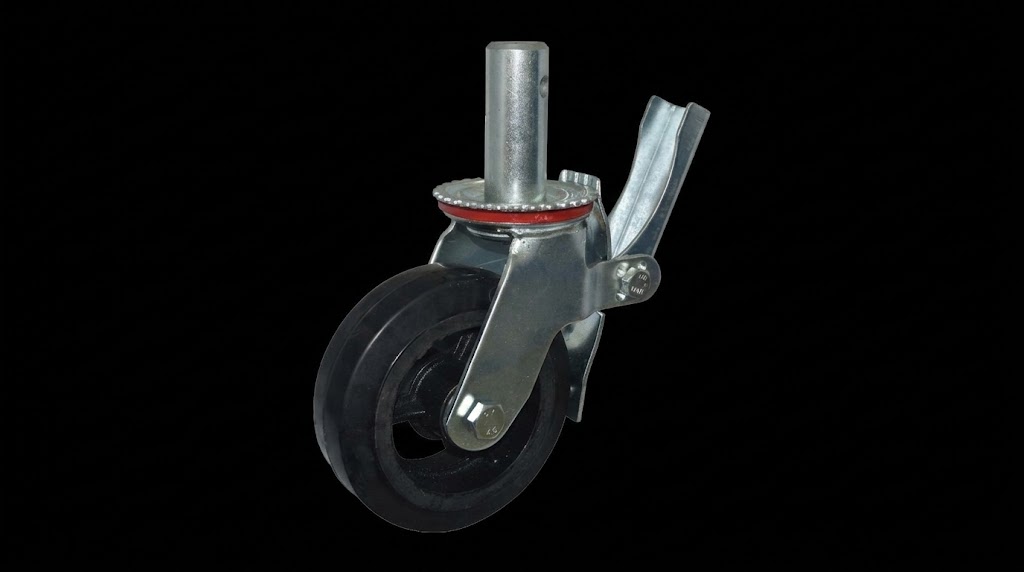
LTL freight, FTL truckload, intermodal rail, and ocean freight are the best shipping methods for large volumes of industrial caster wheels. Your right choice balances cost, speed, shipment weight, and distance. Caster wheels are dense and heavy, so weight limits and handling efficiency decide the method more than anything else, even for Customizable Caster Single Wheels.
Less-than-truckload (LTL) freight lets you ship a partial trailer load and pay only for the space and weight you use. You share the trailer with other shippers. This model suits industrial caster wheels well, because a mid-sized order of dense steel or phenolic wheels can weigh several thousand pounds without filling a full trailer.
You should consider LTL when your order falls between roughly 500 and 15,000 pounds. Most LTL carriers accept shipments up to about 20,000 pounds under standard LTL pricing. This range covers many bulk caster wheel orders, especially mixed orders of swivel, rigid, and brake models packed on standard pallets.
LTL also fits frequent, smaller replenishment runs to distributors or assembly plants. You avoid paying for unused trailer space, and you keep inventory moving in steady waves instead of large seasonal drops.
Watch for the point where LTL stops making sense. Consider switching to truckload when a shipment exceeds 10 pallets, 10,000 pounds, or 12 linear feet of trailer space. Above 10,000 pounds, the rate structure often shifts to volume LTL or spot pricing. Above 20,000 pounds, a truckload quote is usually worth comparing.
Carriers also apply volume triggers. Estes flags shipments above 12 linear feet, FedEx and Dayton Freight use 15 linear feet, and Southeastern Freight Lines uses 20 linear feet. A pallet of caster wheels is short but heavy, so weight usually triggers a reclassification before length does.
Caster wheels are heavy and compact, so handling equipment matters as much as the freight class. You need a dock leveler to bridge the height gap between your warehouse floor and the truck bed. This equipment keeps loading and unloading safe and efficient.
Standardized pallets help you optimize packing, stacking, and space utilization. Customized carts and trailers can speed loading for unusual wheel sizes and shapes. A well-built pallet also protects the wheels from impact damage in transit.
Plan your unloading setup before you book. Confirm whether the destination has a business unloading dock, a forklift on site, or needs lift-gate service. Freight drivers do not assist with unloading, and quotes default to dock-to-dock unless you specify otherwise. A lift-gate adds cost, so verify the receiving site's capabilities first.
Weight caps per handling unit vary by carrier. Old Dominion's pallet program caps loads at 3,000 pounds per pallet. Dayton Freight's liftgate service allows up to 3,500 pounds per handling unit. Larger carriers generally accept up to about 5,000 pounds per skid, while smaller regional carriers often cap skids at 3,000 to 4,000 pounds. Build your pallets to the strictest cap on your route.
| Threshold Category | Typical Value / Rule |
|---|---|
| Minimum weight (LTL eligibility) | ~100 lbs (NMFA guidance); most shipments fall between 500 and 15,000 lbs |
| Maximum weight (standard LTL) | 15,000–20,000 lbs depending on carrier tariff |
| FedEx Freight | LTL under 20,000 lbs; over 15,000 lbs treated as capacity load |
| XPO | LTL/AQ up to 19,999 lbs; truckload begins at 20,000 lbs |
| Estes | LTL fuel treatment through 19,999 lbs; capacity load above 20,000 lbs |
| Southeastern Freight Lines | LTL maximum 20,000 lbs; capacity-load pricing above |
| Per-pallet cap (Old Dominion pallet program) | 3,000 lbs per pallet |
| Per-pallet cap (Dayton Freight liftgate service) | 3,500 lbs per handling unit |
| Volume/linear-feet trigger (Estes) | Above 12 linear feet |
| Volume/linear-feet trigger (FedEx, Dayton Freight) | 15 linear feet |
| Volume/linear-feet trigger (Southeastern) | 20 linear feet |
| Common pricing-tier shift zone | 10,000–15,000 lbs |
LTL pricing runs on weight breaks. Carriers publish base rates charged per hundred pounds (CWT), adjusted by origin and destination. Common breaks occur at 500, 1,000, 2,000, 5,000, and 10,000 pounds. The CWT rate drops as weight increases, so heavier shipments, such as a Heavy Duty Steel And Aluminium Caster Wheel order, cost more in total but less per pound.
Deficit weight billing rewards you for planning. Take a 900-pound Class 100 shipment. At the 500-pound break, the rate is $22.00 per CWT, so the charge is 9 × $22.00 = $198.00. At the 1,000-pound break, the rate is $17.50 per CWT, so the carrier bills 10 × $17.50 = $175.00. The carrier bills at the 1,000-pound break because it yields the lower total.
| Shipment | Weight Break Applied | Rate (per CWT) | Calculation | Total Charge |
|---|---|---|---|---|
| 900 lb, Class 100 | 500 lb break | $22.00 | 9 × $22.00 | $198.00 |
| 900 lb, Class 100 | 1,000 lb break (deficit weight) | $17.50 | 10 × $17.50 | $175.00 |
You can use this structure to your advantage. Moving an order from 480 pounds to 520 pounds can cut the per-pallet cost by nearly 50%. Check rates per weight group whenever a shipment borders the next tier.
Density drives your rate as much as weight does. Many carriers use density-based pricing (pounds per cubic foot) in addition to or instead of class-based pricing. Accurate dimensions on the bill of lading matter as much as the scale ticket. Calculate density by dividing total weight in pounds by total volume in cubic feet, and include pallet and packaging in your measurements.
Caster wheels usually ship as high-density freight, which works in your favor. Heavy but compact freight costs less per pound because it uses little trailer space. A tightly packed 500-pound single pallet costs less than 500 pounds spread across three pallets. Low-density freight pays more, because it consumes trailer space without proportional revenue. DIM weight applies on certain lanes, especially Canada-US routes, to account for large, light freight consuming cubic space.
Full truckload (FTL) shipping dedicates an entire trailer to your caster wheel order. You pay a flat rate for the trailer, not for the weight or the space you use. This model rewards volume. Once your order fills most of a trailer or crosses the carrier's truckload threshold, FTL becomes the cheaper and faster choice.
Choose FTL when your caster wheel order exceeds roughly 20,000 pounds or fills 12 or more linear feet of trailer space. These two triggers mark the point where LTL pricing stops working in your favor. A full trailer of dense steel, iron, or phenolic wheels can weigh 40,000 to 45,000 pounds, and FTL handles that load in a single move.
FTL also fits steady, high-volume supply programs. If your factory or distribution center consumes multiple pallets of wheels every week, a dedicated trailer keeps the pipeline full. You avoid terminal transfers, and you control the pickup schedule. Seasonal stock builds work well under FTL too. You can stage a large inbound shipment before a busy production quarter and store the wheels on site.
Consider FTL for mixed orders that combine several wheel types. A trailer can carry swivel casters, rigid casters, brake models, and Customizable Caster Single Wheels on the same load. One bill of lading covers the whole shipment, and one trailer arrives at your dock.
Multi-stop deliveries also favor FTL. A single truckload can drop pallets at two or three of your facilities along one route. You pay for the trailer and the miles, and each stop adds a modest accessorial fee. This structure often beats three separate LTL shipments to three destinations.
FTL moves faster than LTL on almost every domestic lane. A truckload driver runs directly from origin to destination. An LTL shipment passes through a hub-and-spoke network, and each terminal transfer adds handling time and delay risk. The daily mileage gap is significant.
FTL covers roughly 150 more miles per day than LTL at the midpoint. That difference makes FTL about 1.5 times faster per day on the road. A 1,500-mile domestic haul takes about three to four days by truckload and five to six days by LTL, before you count terminal dwell time.
Security improves with a dedicated trailer. Your caster wheels never leave the truck until they reach your dock. No other shipper's freight shares the space, and no terminal crew rehandles your pallets. Damage claims drop, and tampering risk falls. For high-value wheel runs or orders with tight finish specifications, this sealed-trailer model protects the product from pickup to delivery.
Tracking is tighter under FTL. Most carriers provide GPS visibility on the tractor and trailer. You know where your wheels are at any hour. LTL tracking follows the shipment between scans, and gaps appear during terminal transfers. A direct truckload closes those gaps.
FTL shipments typically travel 400–500 miles per day, while LTL averages 250–350 miles per day, so plan transit times around a 1.5x daily speed advantage for truckload.
A standard dry van trailer carries up to about 45,000 pounds of freight in most US configurations. The exact limit depends on the tractor, trailer, and state bridge laws. A 53-foot van with a legal gross vehicle weight of 80,000 pounds leaves roughly 43,000 to 45,000 pounds for cargo. Caster wheels are dense, so you will hit the weight ceiling before you run out of floor space.
This density profile suits FTL perfectly. You fill the trailer by weight, and you pay one flat rate for the whole load. The cost per pound falls sharply as the trailer fills. A half-empty trailer carries a high cost per pound. A trailer loaded to 40,000 pounds spreads the rate across every wheel and every pallet.
Run the math before you book. Compare the FTL flat rate against the LTL rate at your actual weight. Add the accessorials on both sides: liftgate, inside delivery, detention, and residential fees. FTL usually wins above 20,000 pounds, and the gap widens as weight climbs. Below that line, LTL often stays cheaper.
Weight distribution matters as much as total weight. Load heavy pallets over the trailer axles and spread the mass evenly from front to back. An unbalanced load can exceed the per-axle limit even when the gross weight is legal. Ask your carrier for axle weight guidance on dense wheel loads, and scale the trailer before it leaves your dock.
Detention and loading time affect your true cost. FTL rates often include a free loading window, typically two hours. A well-planned dock loads a full trailer of palletized wheels inside that window. Stage pallets near the dock door, pre-label every unit, and assign a forklift operator before the truck arrives. Efficient loading keeps the flat rate clean and avoids hourly detention charges.
Fuel surcharges apply to FTL rates, and they move with diesel prices. Ask for the surcharge formula in writing. Most carriers index it to a published national diesel average and adjust it weekly. Build a fuel buffer into your freight budget, and review the surcharge line on every invoice.
Intermodal rail combines trucking with rail linehaul. A truck moves your caster wheels to a rail terminal, a train carries the containers over long distances, and a truck delivers them to your dock. This model shines on domestic hauls of 1,000 miles or more.
Choose rail when your caster wheel order ships across the country and your delivery window allows extra days. A factory in the Midwest shipping to West Coast distributors is a classic fit. Rail also suits steady bulk contracts. You can move multiple containers of dense steel or phenolic wheels on one train, and you keep truck traffic off long highways.
Rail works well for port-to-inland moves too. Imported wheels arrive at a coastal port, and rail carries them to a distribution center inland. You combine ocean freight with rail for a full international-to-domestic pipeline.
Rail costs less per mile than truckload on long lanes. A train pulls dozens of containers with one crew, so the fuel and labor cost spreads across every unit. You pay a lower rate per pound on a 2,000-mile haul, and the savings grow with distance.
Non-urgent freight unlocks this savings. Plan your wheel orders around a longer transit window, and rail beats truckload on price. Stock builds, seasonal inventory, and distributor replenishment all tolerate the extra days. Urgent orders still belong on a truck.
Rail containers carry heavy loads well. A 53-foot domestic container holds roughly 40,000 to 44,000 pounds of freight, and dense caster wheels, such as Heavy Duty Castors scaffolding wheels caster, fill that weight limit before the space runs out. Confirm the container weight cap with your intermodal provider, and scale every load before it leaves your dock.
Transit planning needs buffer time. Rail schedules run on fixed departures, and terminal dwell adds days at each end. Build your delivery date around the train schedule, not the other way around. Track the container through each handoff, and keep a truck option ready for time-critical replenishment.
| Planning Factor | Typical Guidance |
|---|---|
| Best distance | 1,000+ miles |
| Container weight cap | ~40,000–44,000 lbs |
| Transit buffer | Add 2–4 days vs. truckload |
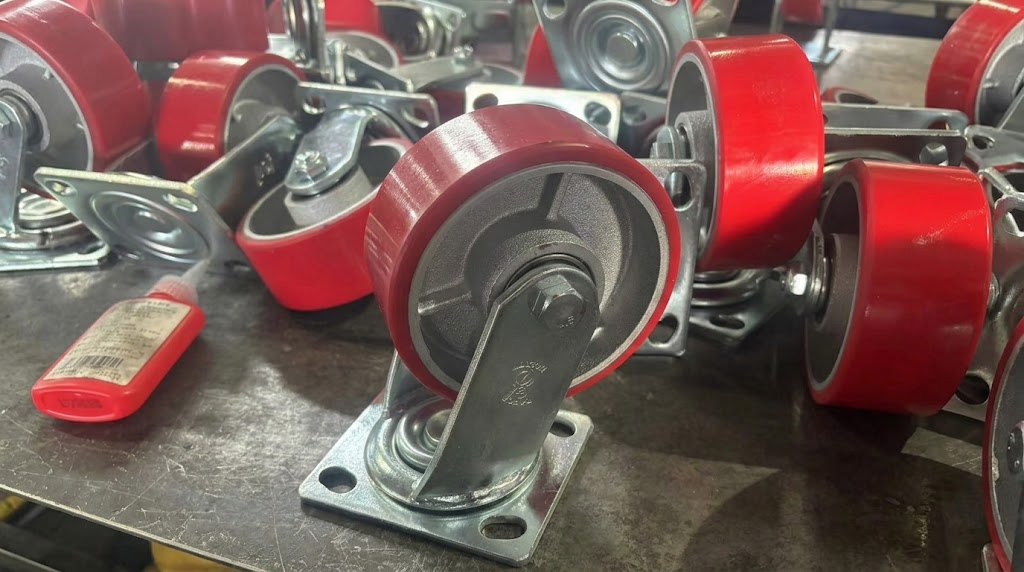
Ocean freight moves your caster wheels across borders at the lowest cost per pound. A container ship carries thousands of containers, so the rate spreads across every unit. This method suits large international orders where lead time matters less than landed cost.
Choose ocean freight when you import full containers of wheels from overseas suppliers. A 20-foot container holds roughly 25,000 to 28,000 pounds of dense freight, and a 40-foot container holds about 44,000 pounds. Steel and phenolic wheels reach those weight caps before the space fills. Ocean freight also fits seasonal stock builds. You book space months ahead and receive a large wave of inventory in one shipment.
Accurate paperwork speeds clearance and prevents misclassification. Prepare these pre-shipment documents for every order:
Certifications strengthen your clearance file and support correct duty categorization:
Mixed-material casters that combine metal and plastic face heightened customs scrutiny. Complete and accurate paperwork matters most for these products.
Importers are advised that regulatory, conformity, and customs requirements vary by market and must be independently verified for the destination country before shipment.
Ocean transit runs 25 to 40 days on major lanes, and port congestion adds variability. Build a buffer into your delivery schedule. Compare the total landed cost, including duties, port fees, and inland trucking, against the freight rate alone. Book space early during peak season, and confirm the container weight cap with your freight forwarder before loading.
Custom orders shift your shipping math. A standard bulk order of Customizable Caster Single Wheels often fills pallets by weight alone. A custom run may mix sizes, tread materials, and bearing types, so your shipment gains pallet count without gaining much weight. That mix pushes you toward LTL freight, where you pay for the space you use. Large custom runs still favor FTL truckload. Confirm your total weight and pallet count before you book, because a custom order can cross a pricing tier in either direction. Lead time matters too. Custom Customizable Caster Single Wheels take longer to produce, so match the shipping method to your production schedule and avoid premium expedited freight.
Dense wheels damage easily in transit. Build each pallet on a sturdy base and stack wheels in stable layers. Wrap the load in stretch film and add edge protectors at the corners. Band heavy pallets to the base so nothing shifts during terminal transfers. Label every pallet with the part number and quantity. Custom Customizable Caster Single Wheels deserve extra care, because a mixed pallet is harder to rebuild after damage. Photograph each pallet before pickup and keep the images with your bill of lading.
Each method trades cost against speed in a predictable way. You can use this table to match your order to the right mode before you request quotes.
LTL costs more per pound at light weights and drops as you approach the next weight break. FTL spreads a flat rate across a full trailer, so cost per pound falls sharply as the load fills. Rail and ocean win on price over long distances, and both reward you for planning around a longer transit window.
Capacity follows the same pattern. LTL caps each pallet at roughly 3,000 to 5,000 pounds, depending on the carrier. FTL, rail containers, and ocean containers each carry about 40,000 to 45,000 pounds of dense wheels.
Damage risk rises with every handoff. LTL shipments pass through terminal transfers, so each rehandle adds impact exposure. FTL keeps your pallets sealed on one trailer from dock to dock. Rail and ocean involve multiple transfers, so invest in banding, edge protectors, and stretch film to protect every load.
FTL truckload delivers your maximum volume at top speed, and LTL freight serves mid-sized bulk orders well. Intermodal rail cuts costs on long domestic hauls, and ocean freight wins for international volume orders. Calculate your total shipment weight and delivery timeline first, then match the method to those numbers. This approach keeps every load of Customizable Caster Single Wheels moving efficiently.
A: Compare both quotes at your actual weight. Add accessorials on each side. FTL usually wins above 20,000 pounds. Below that line, LTL often stays cheaper.
A: Prepare product drawings, HS codes, and a Certificate of Origin for every order. Add RoHS and REACH certifications where applicable. Verify destination-country requirements independently before shipment.
A: Band heavy pallets to a sturdy base. Wrap loads in stretch film and add corner edge protectors. Photograph each pallet before pickup and keep the images with your bill of lading.