

Categorías
Último blog
How Do Top Suppliers Maintain Consistency In TPR Rubber Caster Wheel Mass Production?
Nov 09 , 2026For industrial equipment manufacturers, wholesalers, and distributors, consistent caster wheel quality is just as important as competitive pricing. When purchasing TPR rubber caster wheels in bulk, buyers expect every batch to deliver similar rolling performance, wheel hardness, dimensions, load capacity, and durability. Even small differences between production batches can lead to installation problems, uneven movement, customer complaints, and additional replacement costs.
So, how do top TPR caster wheel suppliers maintain consistent quality during mass production? The answer lies in systematic raw material inspection, controlled material formulation, stable molding conditions, standardized production procedures, and strict quality testing. For manufacturers such as Guangzhou YLcaster Metal Co., Ltd., maintaining product consistency is an important part of providing reliable caster solutions to international customers.
TPR, or thermoplastic rubber, combines rubber-like elasticity with the processing advantages of thermoplastic materials. TPR caster wheels are commonly selected for applications requiring relatively quiet rolling, floor protection, vibration absorption, and comfortable movement.
However, these advantages depend on consistent material properties and manufacturing quality. Variations in raw material composition or processing conditions can affect wheel hardness, elasticity, surface appearance, dimensional accuracy, and bonding between the TPR tread and wheel core.
For example, if one production batch has a noticeably different tread hardness from another, the wheels may produce different rolling resistance or floor contact characteristics. This can become a problem when a customer installs multiple caster wheels on the same trolley or equipment.
Professional suppliers therefore focus on controlling the entire production process rather than relying only on final product inspection. Buyers looking for different TPR wheel specifications can explore YLcaster's TPR wheels product range for available caster configurations and application options.
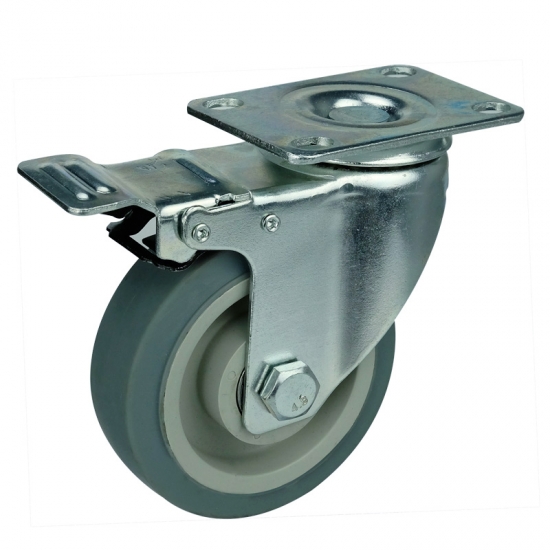
TPR rubber caster wheel for furniture and industrial mobility applications.
Raw material inspection is the first step in maintaining consistent TPR caster wheel quality. Even when manufacturers use the same product design, differences in incoming material batches can influence the finished wheel's physical properties.
Reliable suppliers establish purchasing specifications and inspect incoming materials before they enter production. Depending on the TPR grade and product requirements, important checks may include material identification, appearance, color consistency, hardness-related properties, and supplier documentation.
Material storage is equally important. Improper handling, contamination, or mixing different material grades without approval can create production inconsistencies. Clear labeling and batch separation help manufacturers maintain control over material usage.
For products requiring a TPR tread bonded to a plastic or other supporting core, suppliers must also consider material compatibility. The selection of suitable materials and processing conditions helps reduce the risk of weak bonding or separation during service.
For buyers, asking a supplier about raw material sourcing, incoming inspection, and batch identification is a practical way to evaluate its manufacturing management.
Stable production conditions are another major factor in TPR caster wheel manufacturing. Temperature, injection pressure, material flow, cooling time, and molding cycle conditions can all influence the final product.
During molding, unsuitable temperature settings may cause incomplete filling, surface defects, dimensional variation, or inconsistent material performance. Excessive or insufficient processing pressure can also affect the appearance and structure of molded components.
Top suppliers establish suitable process parameters for each product specification and monitor production conditions throughout manufacturing. Once an approved production setup is established, operators should follow documented procedures instead of making uncontrolled adjustments between batches.
Mold maintenance also deserves attention. Worn cavities, damaged surfaces, and poor mold alignment can create repeated defects even when the raw material is acceptable. Regular cleaning, inspection, and preventive maintenance help maintain dimensional accuracy and consistent product appearance.
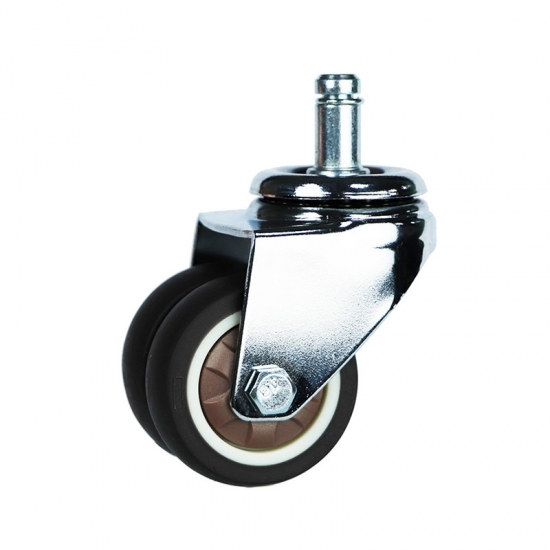
TPR caster wheel assembly for material handling and equipment applications.
Final inspection helps identify defects before products are packaged and delivered. However, effective quality management should combine incoming material checks, in-process inspection, and finished product testing.
Common inspection items for TPR rubber caster wheels include:
Hardness Testing: A suitable hardness tester helps verify whether the TPR tread meets the specified material requirements. Shore hardness should be checked using an agreed testing method and specification.
Dimensional Inspection: Wheel diameter, tread width, mounting dimensions, and other critical measurements should be checked to ensure compatibility with the intended caster assembly.
Load Capacity Testing: Load tests help evaluate whether the caster can support its specified working load under defined test conditions. Buyers should distinguish between static and dynamic load ratings.
Rolling and Swivel Testing: Functional checks help identify abnormal noise, excessive resistance, poor rotation, or assembly problems.
Appearance Inspection: Surface defects, uneven tread formation, contamination, color differences, and visible bonding problems should be identified before shipment.
YLcaster publicly identifies ISO 9001:2015 and RoHS certification information for its Weibida brand, and states that its caster products undergo brake and load capacity testing based on EN12531. These quality management and testing practices provide useful reference points for industrial buyers evaluating a caster manufacturer.
Batch management makes it easier to identify where production variations originate. Professional manufacturers record relevant information about raw material batches, production dates, molding parameters, inspection results, and finished product quantities.
If an inspection identifies an abnormality, these records help the quality team investigate whether the problem is related to material changes, equipment conditions, mold wear, or operator adjustments.
Batch traceability is particularly valuable for wholesalers and distributors who purchase TPR caster wheels repeatedly. It helps suppliers investigate quality feedback and maintain more consistent specifications across future orders.
Suppliers should also use approved product samples and technical specifications as reference standards. For customized orders, confirming the wheel diameter, width, material hardness, core design, color, and mounting configuration before mass production helps reduce misunderstandings.
Price is important, but it should not be the only factor when selecting a TPR caster wheel supplier. Buyers should evaluate manufacturing experience, product range, quality management, customization capabilities, and communication efficiency.
For example, YLcaster offers different TPR caster configurations for furniture, trolley, and industrial applications. Its product range includes swivel casters, fixed casters, and brake-equipped options. Customers can compare available specifications through the TPR trolley wheels collection.
For applications requiring directional stability, buyers can also consider TPR fixed caster wheels. For lighter equipment and furniture applications, the light duty TPR caster range provides another product selection direction.
Before placing a bulk order, buyers should confirm product drawings or samples, technical specifications, testing requirements, packaging details, and acceptable quality standards. A professional supplier should be able to explain how its products are manufactured and how quality is monitored.
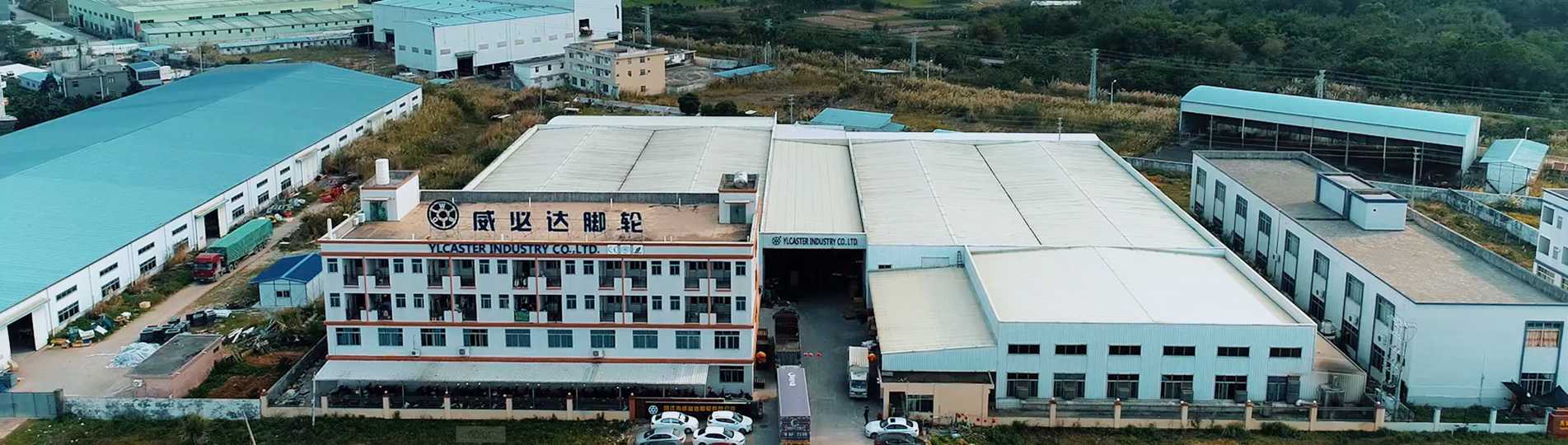
Guangzhou YLcaster Metal Co., Ltd. was established in 1997 and specializes in caster and trolley research, design, manufacturing, and export. Its product portfolio includes industrial casters, furniture casters, medical casters, individual wheels, and platform trolleys.
With a broad selection of wheel materials, sizes, load capacities, and mounting configurations, YLcaster serves customers with different mobility requirements. The company also provides customized solutions through its product development and technical support capabilities.
For wholesalers, distributors, and equipment manufacturers, working with an experienced caster supplier can simplify product selection and bulk purchasing. Whether you need standard TPR caster wheels or customized configurations, matching material properties, wheel dimensions, and load requirements is essential for maintaining reliable performance.
Consistent mass production is not achieved through one inspection alone. It requires coordinated material control, process management, equipment maintenance, testing, and batch traceability. These are the factors buyers should consider when evaluating a long-term TPR caster wheel manufacturing partner.
How do manufacturers maintain consistent TPR caster wheel quality?
They control incoming raw materials, standardize material specifications, monitor molding conditions, maintain production equipment, inspect finished products, and keep batch records.
What causes quality differences between TPR caster wheel batches?
Common causes include raw material variation, inconsistent processing temperatures, incorrect molding pressure, mold wear, material contamination, and insufficient inspection.
What hardness should industrial TPR caster wheels have?
There is no universal hardness value for all TPR caster wheels. The suitable Shore hardness depends on the material grade, application, floor conditions, load, and required rolling performance.
How are TPR caster wheels tested before shipment?
Typical checks include hardness, dimensions, appearance, load capacity, rolling performance, and caster assembly function. Specific testing requirements depend on the product specification.
Can TPR caster wheels be customized for bulk orders?
Yes. Depending on manufacturing feasibility, suppliers may offer customized dimensions, colors, wheel cores, mounting configurations, and load specifications.
How can buyers evaluate a TPR caster wheel supplier?
Check manufacturing experience, quality management systems, material inspection, production controls, product testing, batch traceability, and customization capabilities.