

Categorías
Último blog
How to Choose Heavy Duty Caster Wheels for Industrial Equipment
Aug 07 , 2026
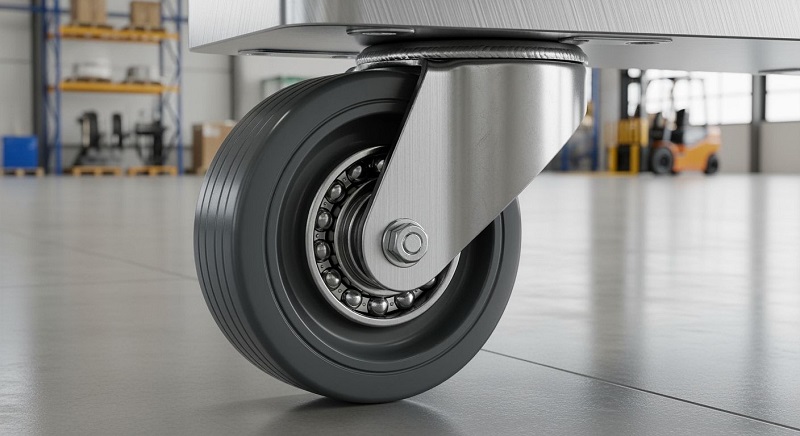
Selecting heavy duty caster wheels for your industrial equipment requires careful evaluation. You must evaluate load capacity, floor compatibility, ergonomic push force, and operating environments. Wrong choices cause frame failure, worker injuries, floor gouging, and costly production downtime.
Calculate minimum ratings before buying new casters: Target Load Capacity per Caster = Total Weight (Equipment + Payload) ÷ (Number of Casters - 1) × Safety Margin.
Uneven plant floors often shift full machinery weight onto fewer support points during daily operation. Incorporating a safety factor prevents structural overload and protects heavy machinery. Choosing high load capacity casters guarantees smooth mobility while meeting all application requirements.
Calculate caster weight capacity using three support points to handle uneven factory floors safely.
Add dynamic safety multipliers to protect machinery from sudden drop forces and towing shocks.
Match wheel tread materials to factory floors to protect surfaces and reduce rolling noise.
Select larger wheel diameters to lower push force and cross floor cracks easily.
Pick precision ball bearings for manual carts and tapered roller bearings for power towing.
Use kingpinless steel rigs to prevent structural breakage during severe high-speed side impacts.
Install stainless steel casters with sealed bearings to stop rust in chemical washdown areas.
Selecting the right support components requires precise mathematical planning. You must accurately determine individual weight demands before purchasing rolling hardware. Standard weight calculations combine the empty weight of your machinery with the weight of your maximum payload. You then divide this combined total weight by the effective support points and multiply by an extra performance buffer. Expressed as a plain formula,Required capacity per caster = (Total supported weight ÷ Effective caster count) × Safety factor. This formula ensures your mobility hardware handles daily strain without premature failure.
You cannot assume four support points distribute weight equally across real factory floors. Factory floors feature subtle imperfections, slopes, and joint seams. Real-world operating conditions create unequal weight distribution due to specific physical causes:
Minor floor unevenness (e.g., a 2 mm height difference)
Trolley frame flex
Uneven load placement on the cart
Dynamic weight transfer when rolling over obstacles like speed bumps
Industry standards globally confirm that only three wheels carry meaningful weight simultaneously on four-wheel units. Therefore, proper calculations set the effective caster count to three rather than four.
Consider a practical manufacturing scenario. You manage a cart carrying heavy industrial equipment with a net empty weight of 1000kg and a maximum payload weight of 500kg. You combine these values to establish a total supported weight of 1500kg. Applying the three-point contact rule divides 1500kg by 3 effective support points, yielding 500kg per support location. Applying a baseline safety factor of 1.5 raises the final requirement to 750kg per wheel. Installing properly rated high load capacity casters protects your frame against sudden shifts.
Static load ratings define dead weight support while units remain completely stationary. Conversely, dynamic load ratings measure structural endurance while units move across factory floors. Dynamic movement generates kinetic energy that exceeds stationary weight demands. Moving carts over floor joints, debris, or threshold ramps instantly multiplies the force applied to support components.
Dropping heavy materials onto platform carts creates sudden mechanical shock. Forklift loading operations often drop heavy payloads onto cart frames from small heights. This drop force momentarily doubles or triples the force exerted on rolling support legs. A stationary static load rating does not account for these peak force spikes. Selecting robust products from a trusted industrial caster supplier ensures your frame survives severe loading drops without bending axles or swivels.
Motorized towing introduces severe dynamic strain compared to manual pushing. Power towing speeds increase kinetic impact energy when wheels strike floor cracks. Fast turning radii create intense lateral side-thrust forces against wheel rigs. High operational speeds also generate continuous heat inside wheel cores and bearings. You must increase your baseline safety factor when integrating powered tuggers or forklift towing systems into your material transport process.
Choosing the proper safety margin buffer guarantees continuous operational stability. You must select an appropriate safety factor based on floor roughness, towing speed, and loading methods.
Manual transport on smooth indoor concrete floors represents a controlled environment. Human operators move carts slowly and avoid high-speed severe impacts. For standard smooth indoor floors, engineers apply a baseline safety factor of 1.3 to 1.5. For example, a 240 kg cart load divided by 3 effective wheels equals 80 kg per unit; multiplying 80 kg by a 1.5 safety factor dictates a 120 kg dynamic load rating requirement for each wheel leg.
Harsh industrial settings demand aggressive protective multipliers. Steel mills, foundries, and heavy forging plants feature debris, severe floor drops, and continuous shocks.
|
Aspect |
Detail |
|---|---|
|
Recommended Safety Margin |
At least 25% |
|
Primary Reason |
To account for uneven weight distribution and dynamic loads common in high-impact environments. |
|
Application Formula |
Load Capacity per Caster = (Total Load Weight / Number of Casters) x 1.25 |
|
Environment Relevance |
Directly specified for demanding settings like foundries and steel mills, where impacts and uneven floors are prevalent. |
Rough outdoor asphalt or severe high-impact dynamic environments demand a safety factor of 2.0 or higher. Mounting heavy duty casters engineered with a dynamic safety factor prevents costly workplace accidents and downtime.
You must choose proper heavy-duty casters to protect coated concrete floors from severe surface gouging. Soft polyurethane treads absorb operational shock and kinetic vibration during daily equipment movement. These resilient materials cushion heavy cart loads and eliminate harsh rolling noise across quiet production facilities.
Polyurethane tread on a cast iron core combines wear resistance with strength. This specialized material protects delicate floor coatings while keeping plant environments comfortable for operators during continuous material transport.
Heavy industrial manufacturing demands resilient rolling support hardware. You can utilize polyurethane treads chemically bonded onto heavy metal cores for demanding cart operations. These wheels carry severe structural weight without cracking or peeling under dynamic stress.
The load rating for polyurethane tread chemically or mechanically bonded to a cast iron core is up to 3,000 pounds. This robust design provides broad structural utility for broad heavy capacity material transport tasks.
Monomer casting nylon provides exceptional material hardness and structural stiffness. You achieve immediate initial rollability when pushing heavy industrial equipment manually across smooth factory floors. Low resistance reduces operator fatigue and improves workplace ergonomic safety.
|
Material |
Rolling Resistance Property |
|---|---|
|
Monomer Casting (MC) Nylon |
maintaining low rolling resistance |
|
Polyurethane |
offers low rolling resistance |
Heavy stationary machinery deforms softer wheel treads during extended storage periods. Solid monomer casting nylon casters resist permanent flat-spotting under extreme long-term load placement.
You keep industrial equipment rolling smoothly without experiencing severe flat spots or wheel wobbles. Solid nylon treads also resist chemical exposure, oil spills, and aggressive cleaning solvents in demanding factory environments.
Extreme machinery weights require maximum rigid support. Solid forged steel and ductile iron wheels offer complete resistance to heavy mechanical impacts and extreme structural stress.
Barron’s steel caster wheels are engineered with weight capacities ranging from 1,400 to 4,500 pounds per wheel.
Forged metal wheels operate reliably inside high-temperature baking ovens and heat-treating facilities. You can consult your industrial caster supplier to select high-temp lubricants for extreme thermal operations.
All-metal wheels resist damage from sharp metal shavings, metal hot scale, and rough concrete floor obstacles. Installing high load capacity casters fitted with robust metal wheels delivers exceptional durability across intense industrial applications. Specifying high-grade heavy duty caster wheels ensures continuous operation and maximum machinery productivity.
You must select proper dimensions to keep your plant equipment moving efficiently across damaged production floors. Larger wheel sizes roll over metal floor joints, cracks, and debris without dropping into gaps. Smaller wheels get stuck easily in floor hazards and cause sudden cart stops.
Scientific studies prove that initial push force shares an inverse proportional relationship with wheel diameter. Doubling your wheel diameter from 4 inches to 8 inches cuts the required starting effort in half for identical cart loads. A larger wheel diameter rolls over floor bumps smoothly while protecting delicate machinery components.
You must maintain safe operator force limits to prevent workplace injuries during manual transport operations. Industry standards like ISO 11228-2 and Liberty Mutual guidelines define clear safety thresholds for manual material handling tasks. These standards establish safe force limits to protect human operators across daily production shifts.
The maximum recommended starting push force is 50 pounds.
The maximum recommended rolling or sustained push force is 40 pounds.
Continuous pushing for one minute or over 10 feet drops the safe limit to 10 pounds or less.
Sustained pushing for four minutes without breaks requires a force of about 7.5 pounds.
You achieve smooth and quiet movement when installing precision ball bearings in manual push carts. Sealed ball bearings reduce rolling resistance on smooth factory floors while keeping out dust and metal shavings. You can source specialized units from a trusted industrial caster supplier to ensure reliable rolling performance.
Ball bearings utilize point contact to minimize internal friction during daily cart operations. These bearings perform best under moderate weights, allowing single operators to move heavy loads easily. Selecting these bearings protects worker health and maintains steady material flow across short facility distances.
You need heavy roller bearings when carrying heavy industrial payloads across rough plant environments. Cylindrical roller bearings spread weight across line contacts rather than single points, expanding overall weight support capacity. Installing high load capacity casters fitted with roller bearings protects axles against heavy static impacts.
Roller bearings absorb severe shock loads during forklift loading operations. These rugged components deliver long service lives inside demanding manufacturing facilities and heavy staging areas. You maintain operational safety while hauling heavy production cart assemblies through tough factory conditions.
You require tapered roller bearings when integrating power-towed tuggers or motorized hauling equipment. Tapered designs feature line contact that supports up to 15% higher radial loads and 20% higher axial loads than similar-sized ball bearings. These components manage radial weight and lateral side-thrust forces simultaneously during sharp high-speed turns.
|
Bearing Feature |
Tapered Roller Bearing Advantage |
|---|---|
|
Load Contact |
Line contact spreads loads over larger surface areas. |
|
Load Capacity |
Supports 15% higher radial loads and 20% higher axial loads. |
|
Force Handling |
Absorbs combined radial and axial thrust forces during high-speed turns. |
Motorized towing generates intense lateral forces on wheel assemblies during continuous operation. Upgrading your cart fleet with premium heavy duty caster wheels prevents wheel wobbles, axle bending, and sudden bearing failure during high-speed transit.
You choose the standard layout of two swivel units and two rigid units for predictable long-distance tracking. This classic configuration lets you steer equipment around corners easily while maintaining straight lines down long factory aisles.
You position the swivel casters at the rear pushing handle and the rigid casters at the front. This arrangement gives you control when moving heavy industrial carts through busy plant hallways.
You select four swivel units when operating in tight factory spaces. This setup allows your cart to move sideways and rotate within its own footprint.
You engage directional locks on two wheels to switch from full rotation to straight-line tracking. Sourcing these specialized items from a reliable industrial caster supplier gives your operators complete steering versatility on crowded floors.
You use twin-wheel designs to carry heavy payloads while keeping overall rig height low. Dual wheels spread high structural weight over a broader contact patch.
You reduce point pressure on floor coatings with twin wheels. This layout improves stability during heavy turning movements.
You install kingpinless welded steel rigs to absorb severe dynamic forces. Traditional kingpins bend or shear off under heavy dynamic side impacts during high-speed transport.
Kingpinless designs replace the central bolt with a forged raceway and steel ball bearings. Choosing robust heavy duty caster wheels built with kingpinless rigs prevents structural failure on rough shop floors.
You bolt top plate mounts directly to your equipment chassis for maximum attachment strength. Solid plate connections prevent mounting studs from pulling out during severe strain.
You align standardized mounting hole patterns with industrial machinery bases. Mounting high-grade casters securely ensures safe transport under multi-ton loads.
You select specific brake mechanisms based on your floor safety needs. Different locks manage wheel rotation and swivel turning differently.
|
Brake Type |
Wheel Rotation Locked? |
Swivel Movement Locked? |
Primary Function |
|---|---|---|---|
|
Total Lock Brake |
Yes |
Yes |
Prevents all movement (wheel rotation and swivel) simultaneously for maximum stability and stationary positioning. |
|
Directional Lock Brake |
No |
Yes |
Restricts swivel function to allow equipment to track straight, while the wheel remains free to roll. |
You secure stationary equipment firmly by using total lock systems. Equipping carts with proper high load capacity casters maintains workplace safety during loading operations.
You protect worker safety with foot-operated pedal brakes. Operators engage or disengage locking mechanisms without bending down.
You improve daily workplace ergonomics with easy pedal actuation. Durable foot pedals maintain reliable grip strength on rugged industrial casters.
Industrial plant floors frequently expose machinery components to cutting fluids, hydraulic oils, and harsh cleaning agents. Standard rubber or low-grade plastics degrade rapidly under continuous liquid contact. Choosing the proper tread material prevents chemical softening, tread peeling, and structural failure.
|
Material |
Recommended For Chemical & Oil Resistance? |
Specific Resistances Mentioned |
|---|---|---|
|
Polyurethane |
Yes |
Oil, grease, water, and most cleaning chemicals |
|
Metal |
Yes |
Oils or solvents |
|
Nylon |
Yes |
Oils, greases, or a lot of chemicals |
Solid tread compounds ensure long-term durability when moving carts through chemical processing zones. You maintain reliable traction and structural integrity by matching wheel compositions to your floor contaminants.
Thermal variation creates severe mechanical stress on caster bearings and raceways. High-heat industrial ovens dry out standard lubricants, while cold storage freezers cause standard grease to solidify. You must select specialized synthetic greases that retain proper viscosity across extreme thermal cycles.
Integrated grease seals prevent dirt ingress while retaining essential lubricants inside swivel heads. High-temperature seals withstand operational temperatures up to 250 degrees Fahrenheit during heat-treat operations. Protecting internal raceways from thermal breakdown guarantees smooth rolling motion under heavy static payloads.
Sanitary production zones demand frequent high-pressure washdowns to prevent microbial growth. Standard steel rigs rust quickly when exposed to water and aggressive sanitizing chemicals. Installing heavy duty caster wheels constructed entirely from stainless steel eliminates rust risks in food processing and pharmaceutical facilities.
|
Stainless Steel Grade |
Standard Application Environment |
Key Application Feature |
|---|---|---|
|
304 Stainless Steel |
General food service zones |
Resists water and mild cleaning agents |
|
316 Stainless Steel |
Corrosive chemical washdown zones |
Resists chloride sanitizers and acidic food products |
Upgrading to premium grade 316 stainless steel provides maximum resistance against pitting corrosion. Electropolished surface finishes with Ra values under 0.8 micrometers eliminate bacterial harbor points on metal legs.
Water ingress destroys unprotected bearing raceways during daily facility washdown routines. Sealed swivel heads utilize precision rubber or silicone gaskets to block moisture penetration completely. You extend hardware service life by keeping water away from internal ball bearings.
Precision sealed ball bearings filled with NSF H1-registered food-grade grease ensure compliance with strict safety standards. Smooth outer surfaces eliminate tight crevices where debris collects during operation. Sourcing sealed units from an experienced industrial caster supplier maintains high hygiene levels across your facility.
Guangzhou YLcaster Metal Co., Ltd. manufactures the specialized Super Heavy Duty Casters series to tackle extreme material handling challenges. Bringing over 20 years of manufacturing expertise, the company builds high-performance mobility hardware certified to ISO9001:2015 standards. Every heavy-duty unit undergoes rigorous testing to meet EN12531 industrial standards for long-term structural reliability.
These robust casters support multi-ton equipment across demanding sectors, including shipbuilding, aerospace, logistics, and heavy machinery manufacturing. Rugged forged steel rigs and thick polyurethane treads handle extreme dynamic stress without mechanical failure. Equipping heavy platform carts with these certified units ensures complete operational safety under severe payloads.
Demanding industrial applications often require specialized design modifications to meet unique layout constraints. YLcaster provides comprehensive OEM and ODM engineering services, leveraging over 25 years of industry experience and a portfolio of over 2000 mobility products. Engineers customize mounting plates, rig dimensions, and wheel materials to fulfill precise load capacity requirements.
Custom twin-wheel setups and specialized brackets maximize weight distribution for heavy platform carts moving two-ton loads. You can specify exact wheel hardness levels to match unique floor surface hardness values. Partnering with expert engineers allows you to source reliable high load capacity casters tailored to your specific application requirements.
You must apply a higher safety factor when switching from manual pushing to motorized tugger trains. Power towing creates severe dynamic side-thrust forces during sharp turns at speed. Mechanical hauling increases dynamic impact forces on heavy industrial equipment when navigating plant aisles.
Motorized transport requires you to derate the published load rating of your heavy duty casters significantly. Fast power towing causes intense dynamic shock when wheels strike floor expansion joints or debris. You should consult an expert industrial caster supplier to select high load capacity casters with adequate dynamic resistance buffers. You increase the safety factor to protect internal axles and swivel bearings against premature dynamic failure.
Fast power towing generates continuous friction heat inside internal bearing raceways and wheel treads. Rapid continuous rolling causes heat from internal material hysteresis to accumulate faster than the wheel material dissipates energy into ambient air.
Motorized applications like automated guided vehicles face severe thermal failure risks during continuous duty cycles:
Higher continuous towing speed directly increases internal bearing temperature.
Increased towing speed elevates tread heat buildup within the solid wheel material.
In high-speed towing above 4 mph, internal heat can exceed the material threshold of 180°F – 250°F.
Polymer breakdown leads to total tread breakdown and catastrophic wheel meltdown.
Selecting heavy duty caster wheels requires matching tread material hardness directly to your plant floor conditions. Hard cast iron treads crush delicate epoxy floor coatings and crack uneven concrete joints. Resilient polyurethane treads cushion severe mechanical shocks while preserving smooth floor surface coatings across busy production bays.
You risk gouging expensive plant floors and ruining treads by ignoring floor surface hardness values. Proper tread material selection balances easy rollability with long-term floor surface protection. Choosing an incorrect tread compound reduces the operational safety factor of your equipment transport carts.
Rolling heavy loads across elevator thresholds subjects wheel assemblies to severe localized point impact forces. Small floor gaps and sharp metal lips trap narrow wheel treads, causing axle bending and raceway deformation.
Increasing your wheel diameter enables smooth rolling movement across wide floor expansion joints and elevator threshold gaps. Larger wheel dimensions roll over sharp floor obstacles easily while protecting delicate payloads inside your plant equipment. You preserve the total load rating of your mobility hardware by preventing sudden mechanical impact shocks during daily transport operations.
You select proper hardware for your plant by following a five-step checklist:
Calculate Load: Determine individual weight demands.
Choose Tread Material: Match treads to floors.
Optimize Diameter & Bearings: Lower roll resistance.
Select Rig Layout: Pick swivel and lock options.
Verify Environmental Standards: Ensure resistance in tough applications.
Selecting reliable heavy duty caster wheels protects your equipment. Guangzhou YLcaster Metal Co., Ltd. delivers mobility solutions supporting 1000kg to several tons. The manufacturer tests hardware to the EN12531 standard under ISO9001:2015 certification. YLcaster provides custom engineering for unique application requirements across heavy manufacturing applications. Contact YLcaster engineers for custom load capacity calculations or download our catalog for your equipment.
You add the equipment weight to the maximum payload weight. Then, you divide this total weight by the number of casters minus one. Finally, you multiply this result by a safety factor to protect your hardware against uneven floors.
Polyurethane wheels protect delicate factory floors from scratches and gouges. They reduce operational rolling noise significantly while absorbing shock. Choosing polyurethane from a trusted industrial caster supplier ensures smooth material handling without damaging floor coatings.
Total lock brakes lock both the wheel rotation and the swivel rotation simultaneously to hold equipment completely stationary. Directional lock brakes hold only the swivel head in place. This allows your cart to track straight down long facility aisles while the wheel rolls freely.
Larger wheel diameters decrease initial push and pull forces dramatically. They clear floor expansion joints, cracks, and shop debris easily. Selecting larger heavy duty caster wheels reduces operator fatigue and helps you maintain safe ergonomic limits during manual cart transport.
You should install kingpinless rigs for high-speed towing and heavy dynamic shock applications. Traditional kingpin bolts shear off under severe side impacts. Kingpinless designs feature forged raceways that absorb intense lateral forces and prevent sudden structural failure.
Motorized towing generates continuous friction heat inside wheel treads and bearings. High speeds also create heavy dynamic shock loads during sharp turns. You must derate published load capacities and select high load capacity casters built with tapered roller bearings for power towing.