


Categorías
Último blog
How Can Importers Ensure Quality When Sourcing 500kg Heavy-Duty Hand Trolleys Wholesale?
Oct 19 , 2026You need a quality process before you contact any supplier. Define load capacity, materials, and design specifications first. Note that 500 kg sits at the top of the heavy duty class, a standard wholesale tier. Vet factories through audits and client references. Verify CE and ISO certificates, then inspect shipments and test samples. These steps protect your investment in Heavy-duty Hand Trolleys.
A solid quality process begins long before you request a quotation. You must translate your business needs into a written specification. This document becomes your benchmark for every supplier conversation, sample evaluation, and inspection. Clear specifications also give you leverage in disputes. A supplier cannot claim ambiguity when your requirements sit in writing.
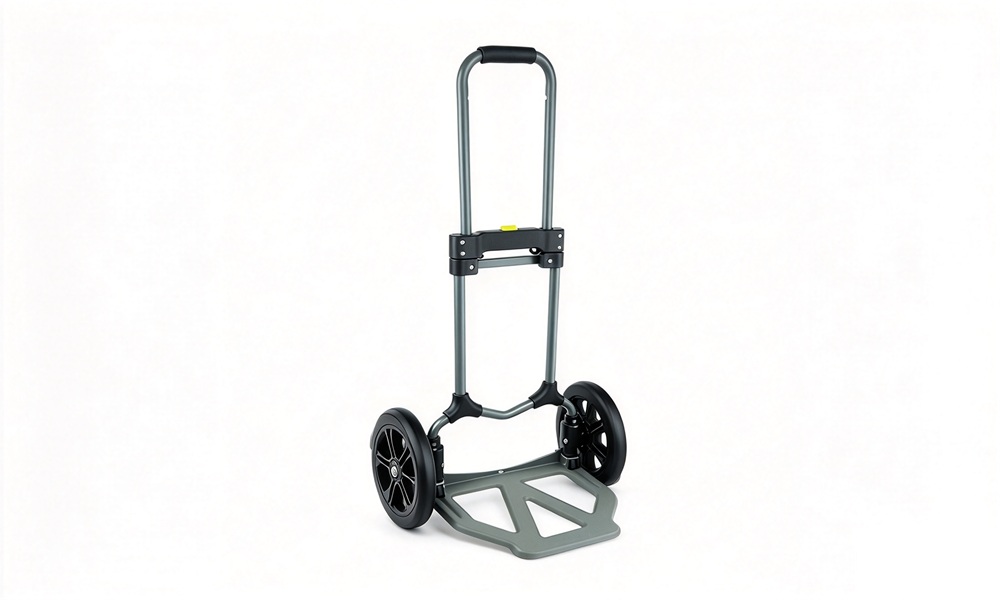
Start with the rated capacity. Most heavy-duty trolleys handle loads from 500 kg to over 1500 kg, depending on the model. A 500 kg rating therefore sits within the standard heavy-duty range, which is exactly where the Economical Plastic Folding Platform Hand Trolley 500kg is positioned. You still need to match that rating to the specific model you plan to buy. Two trolleys with the same nominal capacity can perform very differently under real working conditions.
Apply a safety margin to your calculation. Select a rated load capacity at least 20–25% above the heaviest regular load the trolley will carry. This margin protects against floor damage, worker injury, and premature equipment failure. If your operators routinely move 400 kg loads, a 500 kg model gives you a reasonable buffer. If they occasionally push toward 480 kg, consider a higher-rated unit or reduce the payload.
Weight distribution matters as much as total capacity. Train your warehouse team to place heavier items at the bottom and lighter items on top. Secure loads with straps to prevent shifting. Redistribute the load if the trolley becomes hard to push. Research by Johnson and Miller (2018) found that even load distribution among wheels improves stability and reduces wheel wear. Four-wheel configurations balance stability and maneuverability for medium loads. Six or more wheels suit heavy-duty applications because they spread weight and prevent tipping.
Verify the safety factor in writing. Ask the manufacturer for test certification against ISO 22883 or ANSI/MHIA B88.1 standards. Demand documented proof of the safety factor, typically 1.3x to 1.5x above the working limit. The table below shows the main standards and what each one tests.
| Standard / Method | Testing Focus |
|---|---|
| ISO 22883 | Dynamic roll durability, impact energy absorption, structural load distribution across wheel assemblies |
| ISO 22884 | Performance parameters for heavy industrial wheel setups |
| EN 12532 | Static compression forces, swivel head play, rotational resistance under peak payload |
| ANSI/MHIA B88.1 | Industry-aligned load capacity testing trials |
| GS Mark (Tested Safety) | Handle latch safety, pinch-point hazards, frame structural load limits |
| Finite Element Analysis (FEA) | Predicts dynamic deflection of trolley structure |
| Hydraulic static pressure tests | Applies 1.3x–1.5x safety factor above working limits |
| Automated obstacle track testing | Handle fatigue and structural integrity under motion |
| Wheel durometer shear strength evaluation | Wheel performance under load |
Pay special attention to folding models. Folding hinges typically reduce capacity to around 300–500 pounds (roughly 136–227 kg). Verify the folded rating against your heaviest regular load before you commit to a bulk order. The folding mechanism may lower weight capacity even when the unfolded rating looks adequate.
Material choices determine how long your heavy-duty hand trolleys survive in service. Write every material requirement into your specification sheet. Vague terms like "strong steel" give suppliers room to substitute cheaper grades. The table below lists recommended specifications for a 500 kg model.
| Parameter | Recommended Specification (for 500kg heavy-duty hand trolley) |
|---|---|
| Frame material | Mild steel (MS) square tube — 40x40mm for 500kg models (60x60mm reserved for 1000kg+ models) |
| Frame tube wall thickness | 1.5mm–3mm mild steel, thicker for higher-capacity models |
| Platform/Shelves | 3mm–6mm thick MS sheet or weld mesh |
| Construction standard | High-grade mild steel with reinforced joints and stress points for durability |
| Finish options | Powder coating (various colors), galvanized, or bare metal for corrosion/wear resistance |
| Wheel options | 4x heavy-duty castors — polyurethane, rubber, steel, or nylon depending on floor type |
| Load capacity | 300kg–1000kg+ depending on configuration (500kg model confirmed) |
| Standard sizes | 900mm–1800mm long x 600mm–1200mm wide; 750mm–1000mm working height |
| Stainless steel option | Available for corrosion resistance/cleanroom use (food, pharma, chemical industries) |
A typical 500 kg specification includes several core features. Stainless steel construction suits corrosive or cleanroom environments. A four-wheel platform structure provides stability. Powder coating resists wear and improves appearance. Detachable, adjustable, foldable, stackable, and movable designs add flexibility for different warehouse layouts. CE and ISO certifications confirm basic compliance. OEM and ODM support lets you adapt the design to your market.
Match the wheel material to your floor type. Polyurethane castors protect smooth concrete and resist abrasion. Nylon wheels handle rough surfaces but transmit more vibration. Rubber wheels reduce noise and protect delicate flooring. Steel wheels suit the heaviest loads on industrial floors. Specify the wheel type in your purchase order, because suppliers often default to the cheapest option.
A factory audit confirms that a supplier can actually produce to your specification. Schedule the audit before you place any wholesale order. Follow a structured process so you collect comparable evidence across suppliers.
Client references complete the picture. Verify the manufacturer's track record with other buyers. Reach out to those references directly rather than relying on the supplier's own claims. Ask specific questions about defect rates, delivery reliability, and how the supplier handled problems. A supplier with satisfied long-term clients demonstrates reliability and production capability. A supplier who hesitates to share references deserves closer scrutiny.
Document every audit result and reference check in a supplier scorecard. Compare candidates side by side before you shortlist. This record also gives you a baseline for future audits and annual supplier reviews.
Certifications and inspections form your second line of defense. Specifications tell suppliers what you want. Certifications prove that the product meets recognized safety and quality standards. Pre-shipment inspections confirm that the actual goods match the approved sample and specification. Skip either step, and you accept risk you cannot control from overseas.
Ask for the full certification package before you sign a purchase order. A CE mark alone proves nothing. You need the underlying documents that support every claim. Request original test reports as secure PDF files directly from the vendor. Avoid JPEG, PNG, or editable files, because these formats are easy to forge. Confirm that the issuing laboratory holds ISO 17025 accreditation with an approved scope for material handling equipment. Cross-check third-party reports from SGS, TÜV, or Intertek on their official portals using the certificate registration numbers.
| Report / Document to Demand | Details & Purpose |
|---|---|
| Original test reports (secure PDF) | Request directly from the vendor; avoid JPEG/PNG/editable files that can be forged |
| ISO 17025 accredited lab reports | Confirm the issuing facility holds ISO 17025 accreditation with approved scope for material handling equipment |
| Third-party lab reports (SGS, TÜV, Intertek) | Cross-check certificate registration numbers on official portals (certipedia.com, sgs.com, intertek.com) |
| ISO 22883 / ISO 22884 reports | Validate caster performance |
| EN 12532 reports | Validate industrial castors |
| ANSI/MHIA B88.1 compliance | Mechanical safety and structural frame integrity guidelines |
| GS Mark certification | Often required for European imports |
| Factory Acceptance Testing (FAT) records | Witness static pressure holds, drop tests, and dynamic track runs; verify 1.5x safety factor ratios |
Review each report against your specification sheet. Check the model number, the tested load capacity, and the test date. An expired report carries no weight in a dispute. A report for a different model tells you nothing about the unit you plan to import. Match every document to the exact product you will order.
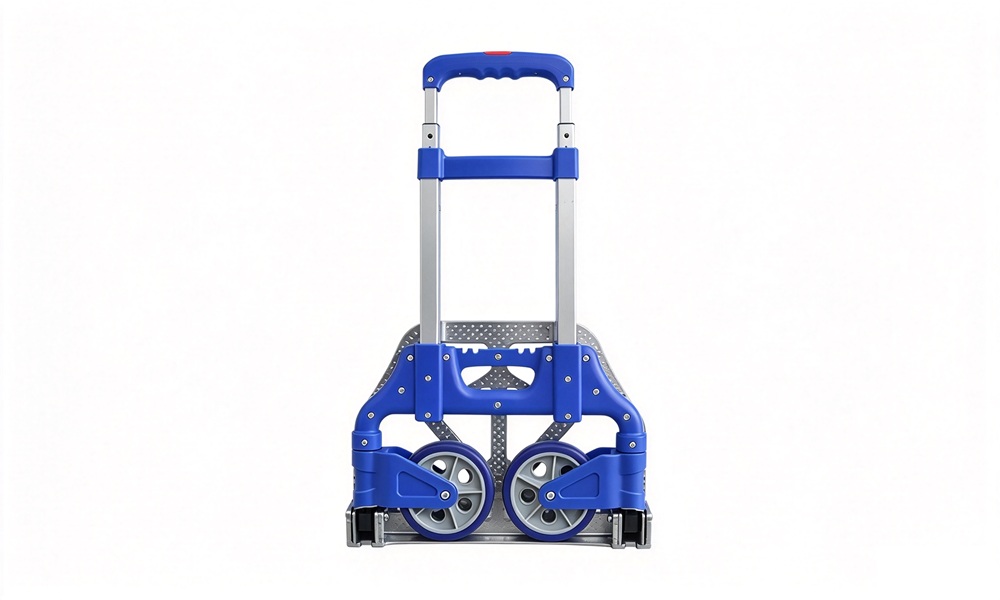
When sourcing a Climbing stairs foldable truck, remember that counterfeit certifications are rampant in manufacturing. A factory may display impressive certificates on its website, but many are forged, expired, or simply do not apply to the products you need. Always verify every certification yourself through official databases. Never accept a PDF certificate at face value. Request the actual test reports, not just certificates, because reports show exactly what was tested and the methodology used.
Follow a structured verification process for every supplier.
| Certificate Type | Verification Method | Official Source / Database |
|---|---|---|
| ISO 9001 | Check the certificate number on the certifying body's public directory; confirm scope matches product category, validity period is active, and the body is accredited (e.g., CNAS for China) | ISO Certificate Validation Portal (iso.org/validate-certificate); certifying body portals (TÜV, SGS, BV) |
| CE | Request the EU Declaration of Conformity and the relevant test report number (e.g., EN 62368-1); verify against CE marking requirements | ce-marking.org |
| FCC | Verify the FCC ID in the official equipment authorization database; for SDoC, require the test report and supplier declaration | FCC OET database (fcc.gov/oet/ea/fccid) |
| UL | Verify the UL file number | UL Product iQ (iq.ulprospector.com) |
| Red flags | No reference number on certificate; database search returns no match; supplier says "trust me, it is real" | — |
Document every verification result in your supplier file. Record the database you checked, the date, and the outcome. This record protects you if a quality dispute arises later. It also gives you a benchmark for annual supplier reviews.
A pre-shipment inspection catches defects before the goods leave the factory. Build a written protocol and share it with the supplier before production begins. The protocol should cover sampling, testing, documentation, and acceptance criteria. Apply the same protocol to every order so results stay comparable across shipments.
Start with a defined sampling plan. Use the AQL (Acceptable Quality Limit) standard to set inspection levels. For heavy-duty hand trolleys, inspect critical safety features on every unit in the sample. Check welds, hinge mechanisms, wheel attachment points, and load-bearing joints. Measure frame tube wall thickness with a caliper and compare it to your specification. Verify the wheel type and durometer against the approved sample.
Run functional tests during the inspection. Load a sample trolley to its rated 500 kg capacity and observe the frame for deflection or stress marks. Push the loaded trolley across a rough surface to test wheel durability and handle stability. Fold and unfold folding models repeatedly to check hinge fatigue. Confirm that the safety factor holds at 1.3x to 1.5x above the working limit.
Review the Factory Acceptance Testing records alongside the physical inspection. Witness static pressure holds, drop tests, and dynamic track runs when your order volume justifies an on-site visit. Compare the FAT results to the test reports you received during supplier vetting. Any mismatch signals a problem worth investigating before shipment.
Check the documentation package before you release the shipment. Confirm that the commercial invoice, packing list, test reports, and Declaration of Conformity all match the inspected goods. Photograph the inspection process and keep the images on file. A complete inspection record gives you evidence if defects appear after delivery.
Put your quality requirements into the contract before production starts. Write clear clauses for load capacity, material grades, weld standards, and wheel specifications. Define the acceptance criteria and the inspection method for each clause. State the remedy for non-conforming goods, such as replacement, repair, or refund. Add a clause that ties final payment to a passed pre-shipment inspection. This term gives you real leverage. Specify the warranty period and the spare parts you expect the supplier to stock. A written contract protects you when a dispute arises months after delivery.
Test a physical sample before you commit to full wholesale volumes. Order a sample of the exact heavy-duty hand trolleys you plan to import. Load it to 500 kg and push it across rough floors. Fold and unfold any folding model repeatedly. Check welds, wheel play, and handle stability. Send the sample to a third-party lab for load and durability testing when your budget allows. Follow a passed sample with a small pilot order. A pilot order reveals the supplier's real production quality, packaging, and lead time. Inspect the pilot shipment with the same protocol you will use for full orders.
Many importers lose money on avoidable mistakes. Watch for these common traps:
Quality assurance starts before your first order. Clear specifications, thorough supplier vetting, and verified certifications build a reliable wholesale partnership. Pre-shipment inspections and contract terms protect you from costly defects and disputes. Sample testing and pilot orders reduce risk before you commit to full volumes. A proactive quality process saves money, protects your brand, and strengthens supplier relationships.
A: Demand test reports from an ISO 17025 accredited lab. Load a sample to 500 kg and check the frame for deflection. Verify the safety factor reaches 1.3x to 1.5x above the working limit.
A: Hold the shipment and document every defect with photos. Require the supplier to repair or replace non-conforming units. Re-inspect the goods before you release final payment.
A: Yes. A short audit still confirms production capability and welding quality. Combine the audit with your sample evaluation to reduce cost and travel time.