
Casters For Food Processing Equipment
Jul 31 , 2026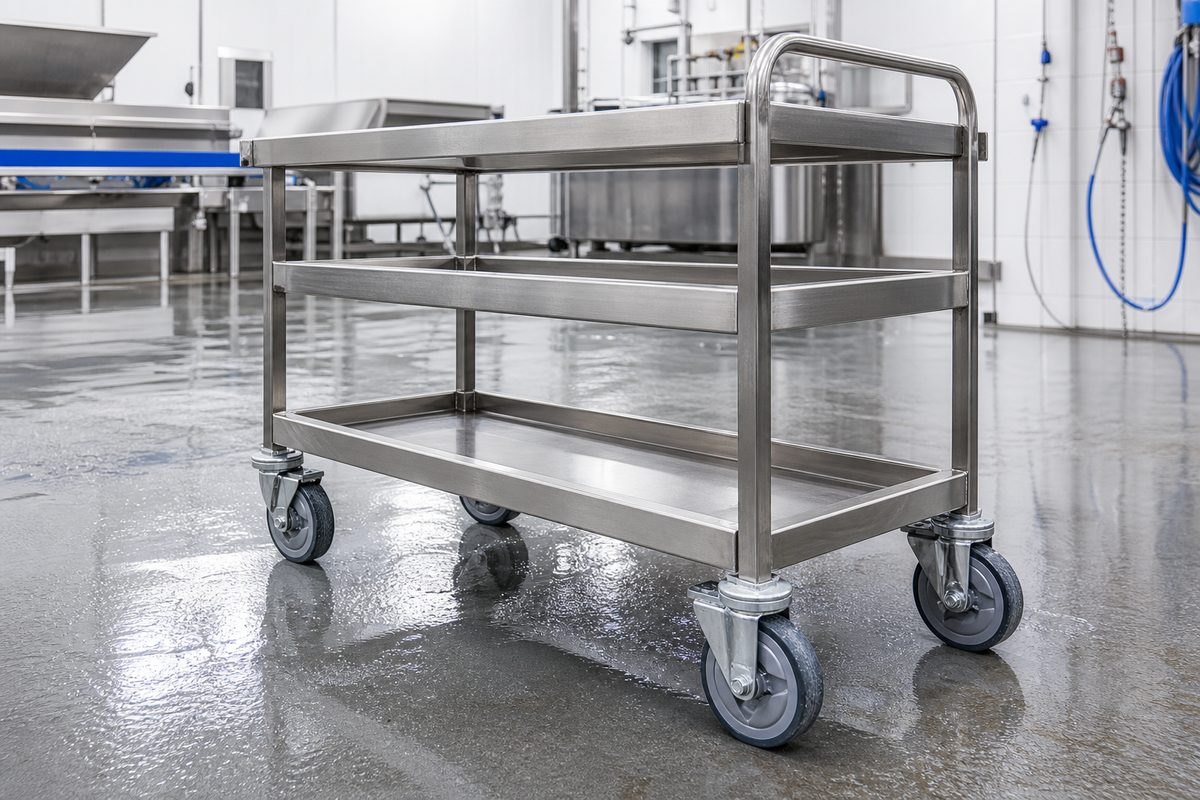
Casters for food processing equipment must be selected for the real sanitation environment as well as the load. Define washdown frequency, water temperature, detergent and sanitizer chemistry, exposure time, floor drainage, food-contact zoning, operating temperature, debris and required mobility. Stainless-steel brackets are often preferred where repeated wet cleaning and corrosion are concerns, while wheel material depends on temperature, chemicals, floor protection and rolling force. Sealed or protected bearings, accessible surfaces and compatible lubricants help reduce maintenance risk. A 'stainless caster' label alone is not enough: verify every component, mounting interface and cleaning procedure.
| Environment | Design concern | RFQ information |
|---|---|---|
| Wet washdown | Corrosion, water entry and lubricant loss | Pressure, temperature, frequency and drying method. |
| Cleaning chemistry | Attack on tread, seals, plating and grease | Chemical name, concentration, contact time and rinse. |
| Temperature | Tread softening, hardening or bearing limits | Continuous and peak temperature plus exposure duration. |
| Floor | Water, grease, drains and joints | Surface type, slope, gaps and slip conditions. |
| Hygiene | Soil traps and inaccessible crevices | Cleaning zone, inspection access and required finish. |
| Load | Static, moving and shock loads | Equipment mass, product load, caster count and speed. |
| Brake | Movement during operation or cleaning | Required lock type and safe actuation access. |
Divide the equipment into sanitation zones. A cart used in a dry packaging room has different exposure from a rack entering a washer or a frame beside an open process. Identify splash direction, pooling points and whether the caster is directly sprayed. This determines the importance of seals, drainage, finish, grease and cleaning access. Do not extend a food-contact material claim to a non-contact caster without documentation.
Temperature data must include time. A wheel that tolerates a brief peak may not support continuous operation at that temperature under full load. Repeated heating and cooling can also loosen interfaces or change tread hardness. State ambient temperature, surface temperature, dwell time, cycle frequency and whether the caster moves while hot. Confirm the exact bearing and lubricant, not only the tread material.
Floor conditions in food plants combine water, fat, powder, joints and drains. These affect traction, rolling and brake holding. A soft tread may improve grip but collect debris or increase push effort. A hard tread may clean easily but transmit shock. Trial the proposed wheel on the actual route after normal sanitation, using the maximum loaded equipment.
The validation record should include dimensions, material declarations requested by the buyer, loaded mobility, brake function, cleaning exposure and inspection after cycling. Check corrosion at cut edges, welds, fasteners and interfaces. Define maintenance that is realistic for the plant: accessible cleaning, scheduled fastener checks and replacement criteria are more valuable than a design that requires impractical servicing.
A stainless cart has a 70 kg frame and carries up to 210 kg of ingredients. It uses four casters and is pushed between mixing and cleaning zones. The nominal total is 280 kg. Using a conservative three-caster load-sharing basis gives 93.3 kg per caster before allowing for threshold impact, offset loading and service conditions.
The room is washed daily with warm water and alkaline detergent, then rinsed. The floor has drains and shallow joints. The selection team shortlists stainless or suitably corrosion-protected brackets and a tread compatible with the detergent. A larger wheel is considered for drain transitions. If the equipment can move while mixing, a total-lock brake and operating restraint need system-level risk review.
YLCASTER's catalog includes food cart caster family I023, stainless-steel caster families and heat-resistant family I020. The I023 examples include 60–100 mm configurations with published ratings from 20 kg to 70 kg depending on model, so they are not automatically suitable for this 280 kg cart. The engineer must instead identify a stainless industrial model whose verified rating, wheel material and dimensions meet the calculated duty.
Separate corrosion resistance from hygienic design. Stainless steel can resist rust but still have crevices that are difficult to clean. Review bracket geometry, axle ends, brake parts, fasteners and the interface between caster plate and machine frame.
Do not approve a wheel material from a generic chemical-resistance chart alone. Concentration, temperature, mechanical stress and exposure time interact. A sample soak or controlled application test using the actual sanitation process is more informative.
High-temperature ratings often have time limits. The YLCASTER catalog notes that continuous high-temperature exposure for its listed heat-resistant caster family should not exceed four hours. Confirm exact model temperature, duration, load and cooling cycle rather than transferring the note to every product.
Water on the floor changes braking and push behavior. Evaluate stopping, parking and operator footing under wet conditions. The safest answer may include equipment restraints or procedural controls in addition to caster brakes.
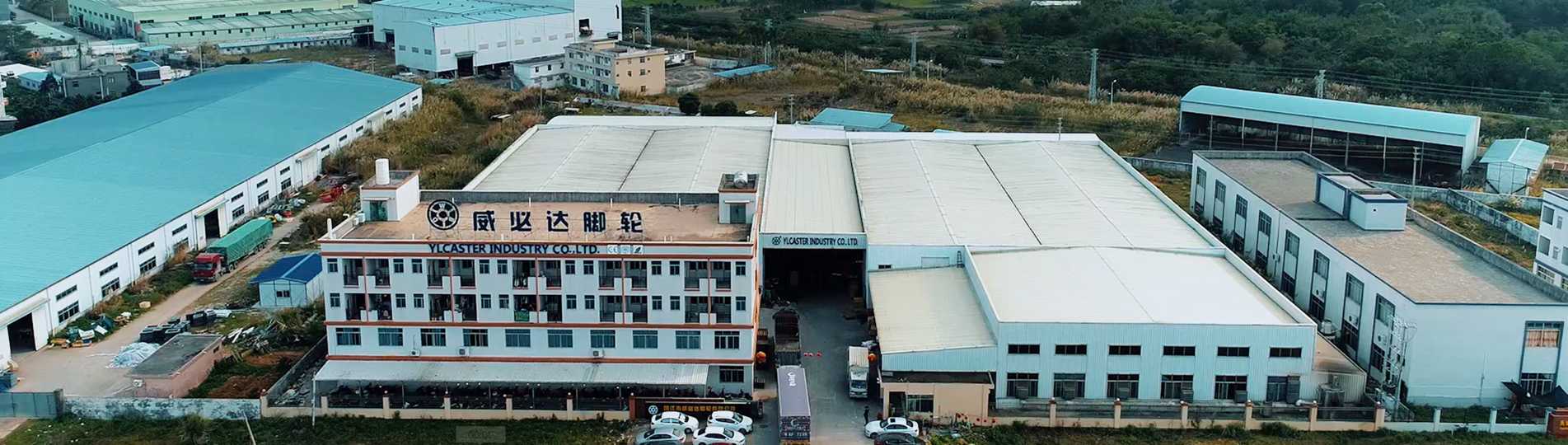
YLCASTER was established in 1997. The 2025 company profile reports a 40,000 m² plant, about 200 employees, more than 2,000 caster items, and an available load-capacity range from 10 kg to 30 tons across the full portfolio. The same source lists CE, RoHS and ISO 9001 credentials. These company-level figures describe the portfolio and factory; they are not a rating for every individual caster.
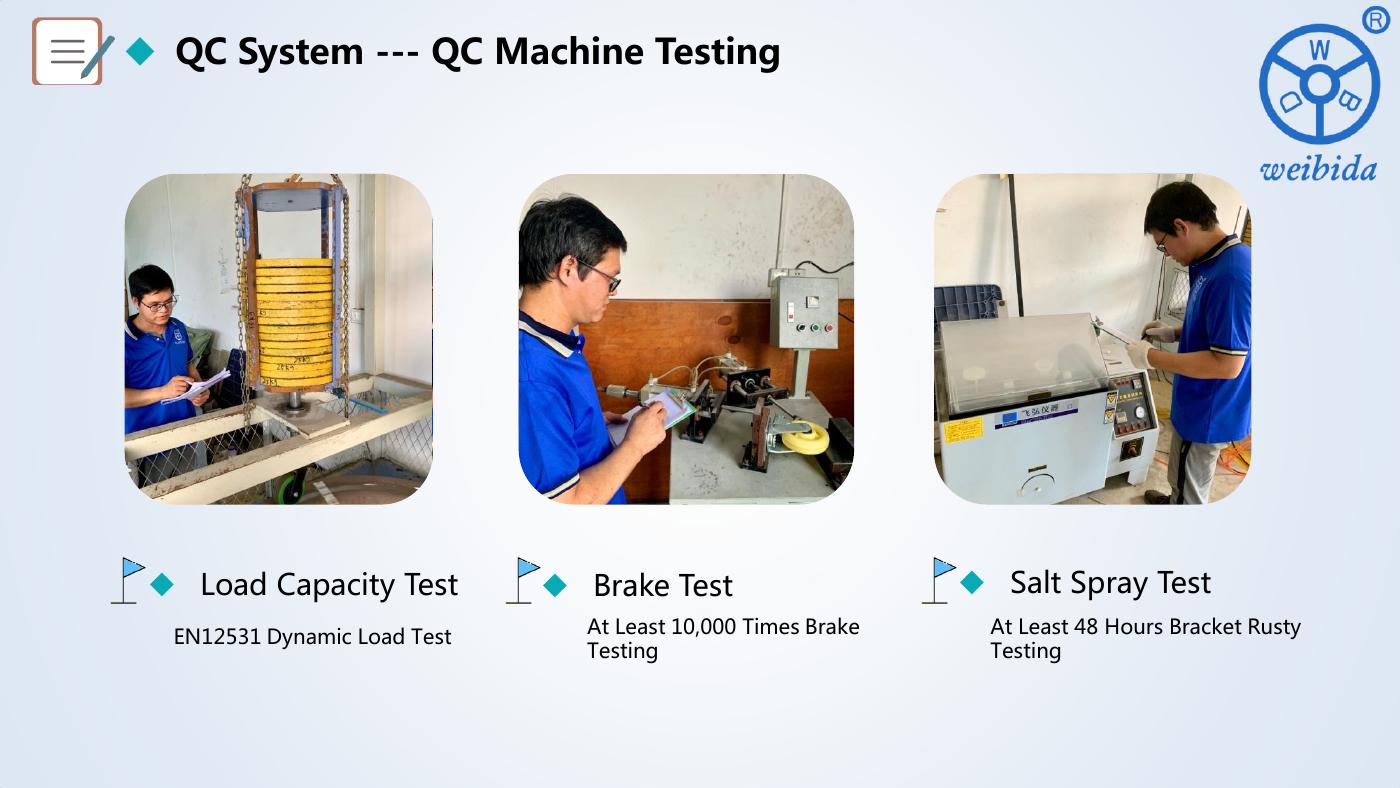
Factory materials show load-capacity, brake and corrosion testing resources. The exact test report, rating and acceptance criteria must be requested for the selected model; company capability statements are not substitutes for a model-specific result.
For casters for food processing equipment, international buyers should separate technical approval from commercial approval. First freeze the model, drawing revision, materials, rating basis, test scope and sample. Then compare MOQ, lead time, Incoterm, carton quantity, pallet dimensions, gross weight, spare parts and warranty process. This prevents a shipping or packaging change from quietly altering the approved caster. Ask the supplier to list every deviation from the RFQ instead of hiding alternatives in a general quotation.
Projects for Germany and wider Europe may emphasize documentation, controlled specifications and corrosion performance; buyers in Brazil, Colombia and Peru may also need robust export packing and clear Portuguese or Spanish labeling; Korea may require precise drawings and consistent finish; Saudi Arabia and Kenya can add heat, dust, storage and route concerns; Russia may require climate and logistics review. These are planning prompts, not legal conclusions. The importer must confirm current local regulations, language, conformity and customs requirements for the final equipment.
Before shipment, approve label content and photograph the packed pilot carton. Link carton labels to the model and purchase order, and request final inspection evidence appropriate to the risk. On receipt, check identity, dimensions, visible damage, wheel rotation, swivel and brake function before releasing the lot to production. Early feedback with model and lot details helps the supplier investigate quickly and protects repeat-order consistency.
It depends on washdown, chemistry, temperature, floor and load. Stainless brackets are common for corrosion resistance; wheel choices can include PU, TPR, nylon, phenolic or specialized compounds after compatibility review.
Stainless material improves corrosion resistance, but hygiene also depends on geometry, finish, drainage, seals and cleaning access. Review the whole assembly and mounting interface.
Only if the selected bracket, wheel, bearing, seal and lubricant are compatible with the pressure, temperature and chemicals. Provide the actual washdown protocol to the manufacturer.
Tread and floor combinations must be tested for rolling, braking and slip behavior. Water, oil, food residue and sanitizer can change friction substantially.
PU may be suitable for equipment mobility, but food-contact status, chemical compatibility and hygiene requirements depend on the formulation and location. Do not assume the wheel is approved for direct food contact.
Use them when ovens, racks or sanitation cycles exceed standard caster limits. Specify continuous and peak temperature, exposure time, load and cooling conditions.
Choose compatible materials and finishes, avoid trapped water, rinse aggressive chemicals as required, allow drying, inspect regularly and replace damaged components.
Provide load, caster count, wheel and mounting dimensions, cleaning chemicals, washdown pressure and temperature, operating temperatures, floor details, brake needs and applicable hygiene standards.
Image note: the article cover is an application visualization created for YLCASTER. Product specifications and factory statements are based on the YLCASTER 2025 catalog and company profile. Confirm the final product model and test report before purchase.