
Heavy Duty Caster Buying Guide
Jul 31 , 2026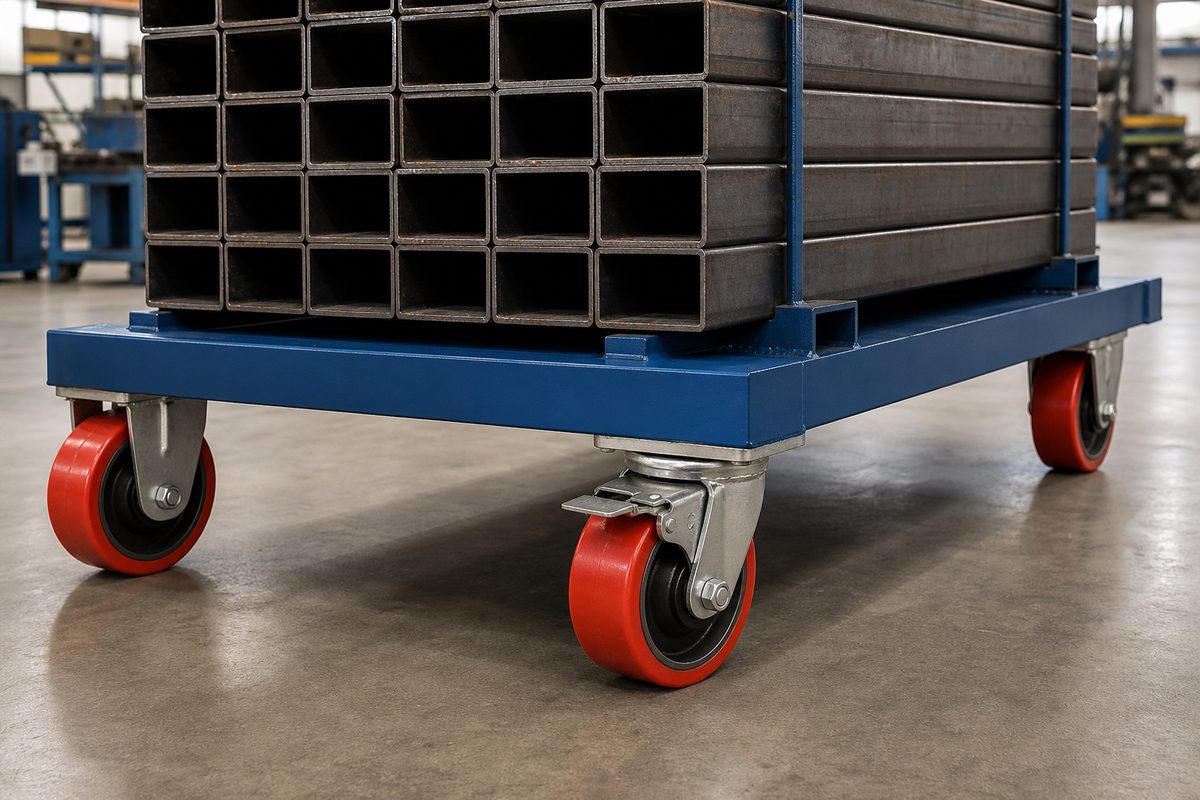
Buy heavy-duty casters by defining the complete system before comparing catalog ratings. Calculate maximum equipment plus payload mass, unequal load distribution and dynamic shock. Then specify wheel diameter and width, tread and core material, bearing, plate dimensions, bolt holes, overall height, offset, swivel radius, bracket construction, finish, brake type, speed, floor, obstacles, temperature, chemicals and duty cycle. Polyurethane is a common industrial choice for capacity, wear and floor protection; rubber or TPR can reduce noise; nylon, cast iron or steel may suit hard-duty conditions where floor impact is acceptable. Verify the exact model's test conditions and never select by wheel color alone.
| Buying decision | Key question | Common mistake |
|---|---|---|
| Capacity | What is maximum moving mass and worst load shift? | Dividing by four without uneven-floor allowance. |
| Diameter | What joints, debris and push-force target exist? | Choosing the smallest wheel that carries the load. |
| Tread | Is floor protection, noise, heat or chemical resistance primary? | Treating every PU, rubber or nylon formulation as identical. |
| Core/bearing | What speed, shock and duty cycle apply? | Ignoring heat, axle fit and maintenance. |
| Mounting | Can the frame carry side and impact loads? | Matching capacity but not plate or bolt pattern. |
| Swivel geometry | Is tracking or tight turning more important? | Ignoring offset, swivel radius and cart layout. |
| Brake | Must it park, hold swivel direction or stop on slope? | Assuming every brake is a total lock. |
| Validation | Under what method was the rating established? | Comparing headline capacities with different test conditions. |
Define the duty class in operational terms. Manual carts, tow-line trains, fixtures that move only during maintenance and continuously cycled production racks can carry the same mass but need different casters. State travel speed, distance per shift, number of starts and turns, idle time, shock events and environmental limits. This gives the supplier enough information to distinguish static support from demanding dynamic use.
Review the floor as an engineering input. Measure joint width and height, record debris and identify ramps or metal plates. Larger-diameter wheels generally reduce obstacle force, while wider treads distribute load but can increase scrub during turns. The best configuration balances straight rolling, steering, floor protection and available installation height.
Mounting strength should be checked from the contact patch to the frame. The wheel, axle, fork, swivel race, top plate, bolts, welds and cart corner all form one load path. Side loads during turning and impacts at joints can govern. Use flat mounting surfaces, appropriate fasteners and torque control; inspect for loosening during prototype trials.
A purchasing specification should state acceptance, not just preference. Include the exact drawing, capacity basis, material and hardness, finish, bearing, brake, test references, labeling, packaging and change-control rules. Require model-specific confirmation. This makes quotations comparable and helps prevent a later shipment from matching the photo but not the validated performance.
A steel fabrication cart has a 300 kg frame and carries up to 900 kg, for a maximum moving mass of 1,200 kg. It uses four corner casters. A conservative three-point load-sharing calculation is 1,200 ÷ 3 = 400 kg per caster before additional allowance for crane loading, floor joints and impacts. The project therefore needs model ratings comfortably above 400 kg under the agreed dynamic conditions.
The cart travels slowly on concrete, crosses 12 mm joints and occasionally receives an off-center load. Large-diameter PU-on-iron or PU-on-aluminum wheels are shortlisted to balance rolling efficiency and floor protection. The frame designer checks that the plate corners, welds and bolts can transfer vertical and lateral loads. Two swivel and two rigid casters are considered for tracking; a directional-lock solution is considered if the cart must also maneuver in cells.
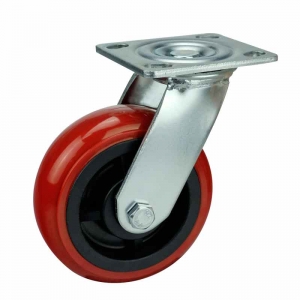
YLCASTER's published American heavy-duty range describes welded-bracket 4, 5, 6 and 8 inch casters with stated capacities from 220 to 2,200 lb depending on model, plus multiple tread materials. The company-wide catalog includes heavy and super-heavy families, but the buyer must obtain a model-specific drawing and rating for the required 400+ kg dynamic duty.
Capacity is a gate, not the finish line. Once a product passes the load requirement, compare push force, threshold behavior, floor stress, noise, heat and maintenance. A massive caster that operators cannot steer is not a successful selection.
Check overall height and swivel envelope early. Increasing wheel diameter can interfere with the frame, brakes, guards or neighboring casters. The CAD model should include offset and full swivel radius under all equipment positions.
Shock loading often controls the design. Forklifts placing material, joints, debris and abrupt direction changes create loads higher than the static weight. Describe these events honestly in the RFQ so the supplier can recommend an appropriate safety factor and test.
Plan inspection and replacement. Look for tread damage, flat spots, bearing play, loose plate fasteners, cracked welds, brake wear and increased push force. Replacement parts must match the approved model and revision.
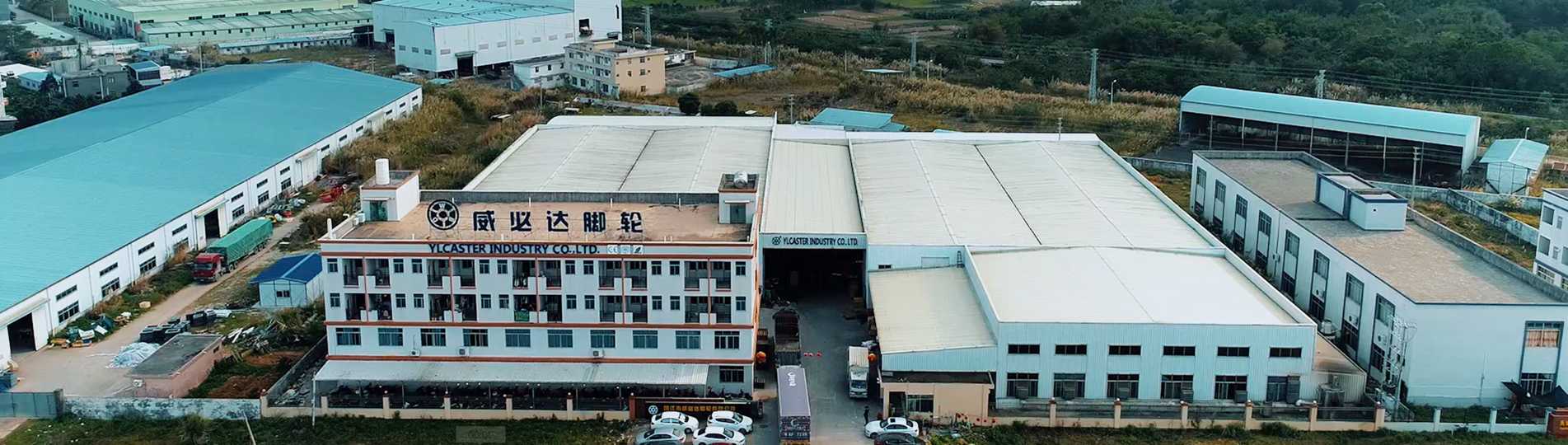
YLCASTER was established in 1997. The 2025 company profile reports a 40,000 m² plant, about 200 employees, more than 2,000 caster items, and an available load-capacity range from 10 kg to 30 tons across the full portfolio. The same source lists CE, RoHS and ISO 9001 credentials. These company-level figures describe the portfolio and factory; they are not a rating for every individual caster.
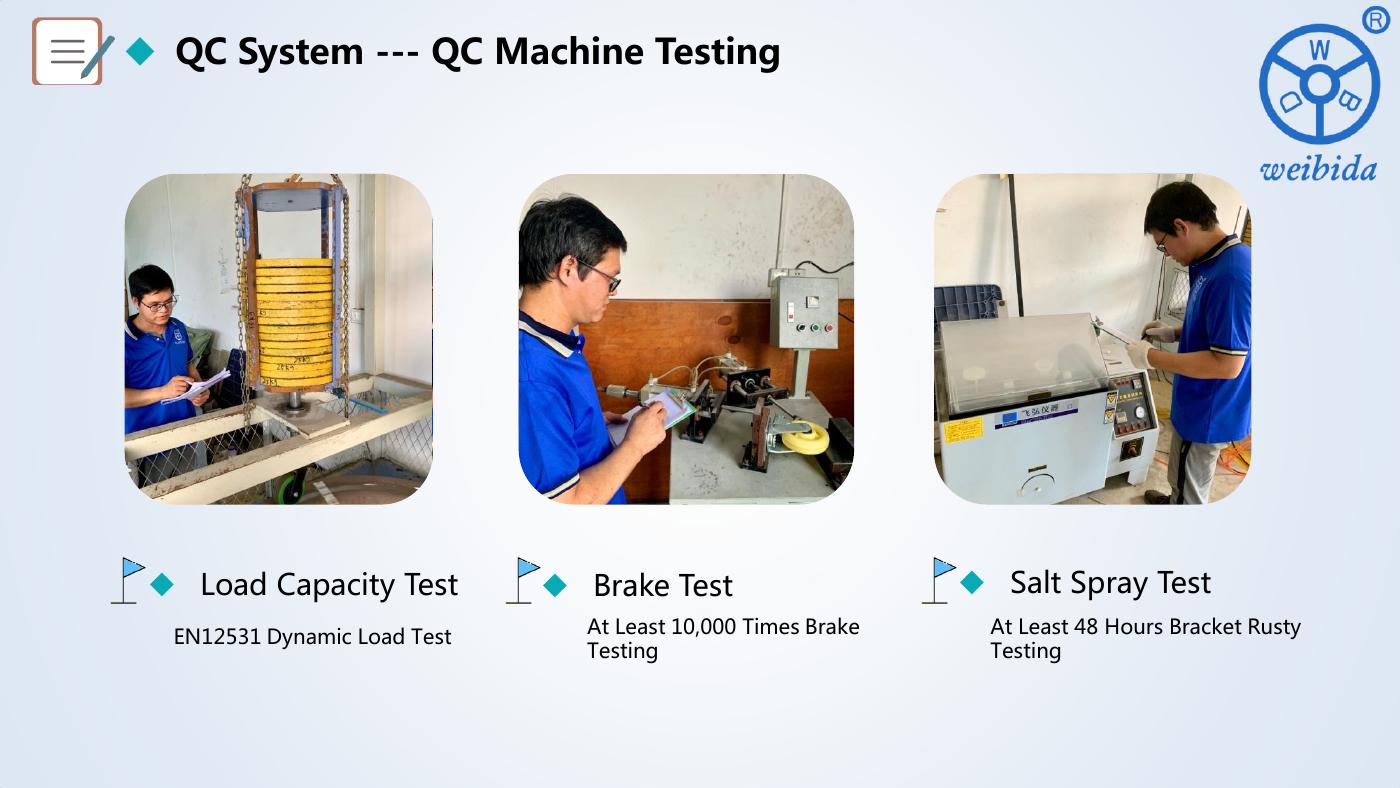
Factory materials show load-capacity, brake and corrosion testing resources. The exact test report, rating and acceptance criteria must be requested for the selected model; company capability statements are not substitutes for a model-specific result.
For heavy duty caster buying guide, international buyers should separate technical approval from commercial approval. First freeze the model, drawing revision, materials, rating basis, test scope and sample. Then compare MOQ, lead time, Incoterm, carton quantity, pallet dimensions, gross weight, spare parts and warranty process. This prevents a shipping or packaging change from quietly altering the approved caster. Ask the supplier to list every deviation from the RFQ instead of hiding alternatives in a general quotation.
Projects for Germany and wider Europe may emphasize documentation, controlled specifications and corrosion performance; buyers in Brazil, Colombia and Peru may also need robust export packing and clear Portuguese or Spanish labeling; Korea may require precise drawings and consistent finish; Saudi Arabia and Kenya can add heat, dust, storage and route concerns; Russia may require climate and logistics review. These are planning prompts, not legal conclusions. The importer must confirm current local regulations, language, conformity and customs requirements for the final equipment.
Before shipment, approve label content and photograph the packed pilot carton. Link carton labels to the model and purchase order, and request final inspection evidence appropriate to the risk. On receipt, check identity, dimensions, visible damage, wheel rotation, swivel and brake function before releasing the lot to production. Early feedback with model and lot details helps the supplier investigate quickly and protects repeat-order consistency.
There is no single universal threshold. Manufacturers group products by their own portfolio and test conditions. Compare exact dynamic rating, construction, size and application—not the label alone.
Add maximum frame, payload and accessories. For four casters, divide by three for uneven loading, then account for shock, speed, floor, temperature and duty. Confirm the exact model's dynamic rating.
PU often offers higher capacity and wear with good floor protection; rubber can provide softer, quieter travel and shock absorption. Formulation, hardness and floor conditions decide the better choice.
Often, but not always. Bracket, bearing, hub, tread and test method also control capacity. Larger diameter mainly helps rolling and obstacle crossing when the entire design is suitable.
Two swivel plus two rigid gives stable tracking for many carts. Four swivel improves maneuverability. Directional locks can add control. Select from aisle geometry and operating method.
A total-lock brake is designed to restrict both wheel rotation and swivel movement. Terminology varies, so confirm the mechanism and holding performance on the exact model.
Only when designed and rated for the tow speed, duty, impacts and heat. A manual caster rating should not be assumed valid for powered towing.
Provide maximum load, load distribution, caster layout, speed, distance, floor and obstacles, wheel dimensions, mounting, brake, environment, desired life, annual quantity and validation requirements.
Image note: the article cover is an application visualization created for YLCASTER. Product specifications and factory statements are based on the YLCASTER 2025 catalog and company profile. Confirm the final product model and test report before purchase.