

Categorías
Último blog
Selección de ruedas industriales para aplicaciones de alta resistencia: factores técnicos clave
Jan 06 , 2026En aplicaciones industriales, las ruedas giratorias funcionan como componentes de soporte de carga y control de movimiento. Una rueda giratoria inadecuada puede aumentar la fuerza de empuje, acelerar el desgaste y generar riesgos de seguridad. Este artículo describe cómo seleccionar ruedas industriales, centrándose en... load rating, wheel material, diameter, and working environment .
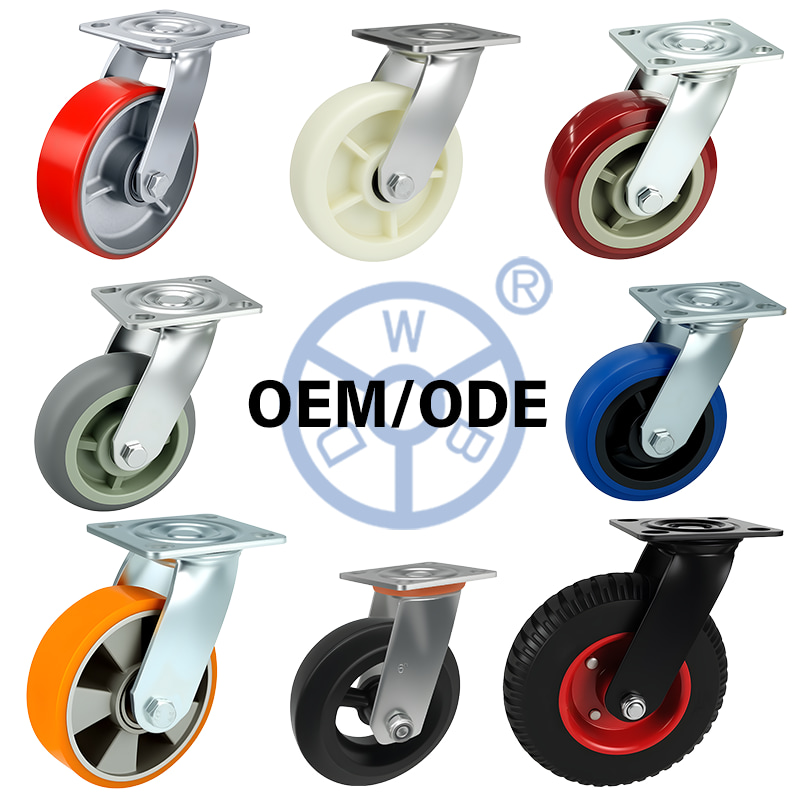
Industrial casters must support both static weight and dynamic forces generated during movement.
Best practice:
Calculate the maximum operating load
Assume uneven load distribution
Apply a minimum 30% safety margin
Casters selected without sufficient safety margin often fail under real operating conditions.
Combine elasticity with strength
Lower rolling resistance than rubber
Good floor protection
Common use: logistics trolleys, production carts, material handling systems.
High rigidity and load capacity
Minimal deformation under load
Excellent resistance to chemicals and moisture
Common use: heavy industrial equipment, clean or wet environments.
Absorb shocks and vibrations
Improve stability on uneven surfaces
Reduced load capacity compared to PU or nylon
Common use: rough floors, vibration-sensitive equipment.
Designed for extreme loads
Suitable for high-temperature or harsh environments
High noise and floor impact
Common use: steel plants, heavy machinery, extreme-duty transport.
Wheel diameter directly affects mobility:
Larger wheels roll more easily under load
Reduce effort required for manual handling
Improve performance over joints, cracks, and debris
For industrial equipment, larger diameters generally improve reliability and service life .
Beyond load and material, industrial casters should be selected based on:
Floor surface condition
Exposure to oils, chemicals, or heat
Need for braking or directional control
Required durability and maintenance interval
Matching casters to the environment prevents premature failure.
| Application Type | Wheel Material | Diameter | Load Level |
|---|---|---|---|
| Assembly carts | PU | Medium–Large | Medium |
| Heavy equipment | Nylon / Cast Iron | Large | Very High |
| Chemical facilities | Nylon | Medium–Large | High |
| Rough floors | Rubber / PU | Large | Medium |
Industrial caster selection requires a balance between load capacity, wheel material, diameter, and operating conditions. Choosing the right combination improves safety, reduces operator effort, and extends equipment lifespan in demanding industrial environments.